Demystifying RAG: Why Your AI Needs a Brain Upgrade
Imagine setting up a local, highly advanced AI model running 3 billion parameters on your local machine. You prompt it about the latest updates in a recent operating system release—say, iOS 27. The model processes the text instantly and generates a highly confident, fluent response. The only catch? The information is completely made up—a classic AI Hallucination.
When you ask a commercial engine like Gemini the identical question, it accurately delivers a perfectly structured, precise summary of the real-time ecosystem updates. Why did the local model fail while the cloud-based system succeeded? Is this purely a consequence of model size, or is there a fundamental architectural shift happening behind the scenes?
The Model Size Myth
It is easy to assume that scaling up parameters resolves the factual gaps in modern AI. To test this hypothesis, we can transition from a lightweight local model to an enterprise-grade standalone instance running Meta's Llama 3.3 with 70 billion parameters. Despite its vast size and advanced architectural training, prompting it with the exact same question yields the same result: a highly structured but entirely fabricated set of details.
This experiment confirms a crucial concept in modern AI engineering: information gaps are not a consequence of model size, but rather a limitation of the data freeze window.
What is an AI Hallucination? When an LLM lacks real-time knowledge or specific facts about an event, it relies strictly on its historical pre-trained weights to construct an answer. The result is a convincing, grammatically perfect response that is completely detached from reality.
Why Large Language Models Fall Behind
To understand the root cause of this limitation, we must examine the fundamental lifecycle of LLM training:
Let's assume a state-of-the-art base model finishes its final training cycle on a set date:
- Freeze Date () = December 2025
To prepare that massive dataset, engineers typically freeze data collection weeks or months prior. Once frozen, no new information enters the training pool. If a user asks the model about an event that occurred after the cutoff date, the model has absolutely no internal parameters to map it accurately. It is forced to synthesize an output based on outdated weights.
Why can't we just retrain models continuously?
Retraining large foundational models on a weekly or even monthly basis is entirely unfeasible. The computational infrastructure, time, and financial investment required to process multi-terabyte datasets render periodic retraining economically prohibitive for modern applications. This brings us to the optimal engineering solution: RAG.
The Mechanics of a Simple RAG Pipeline
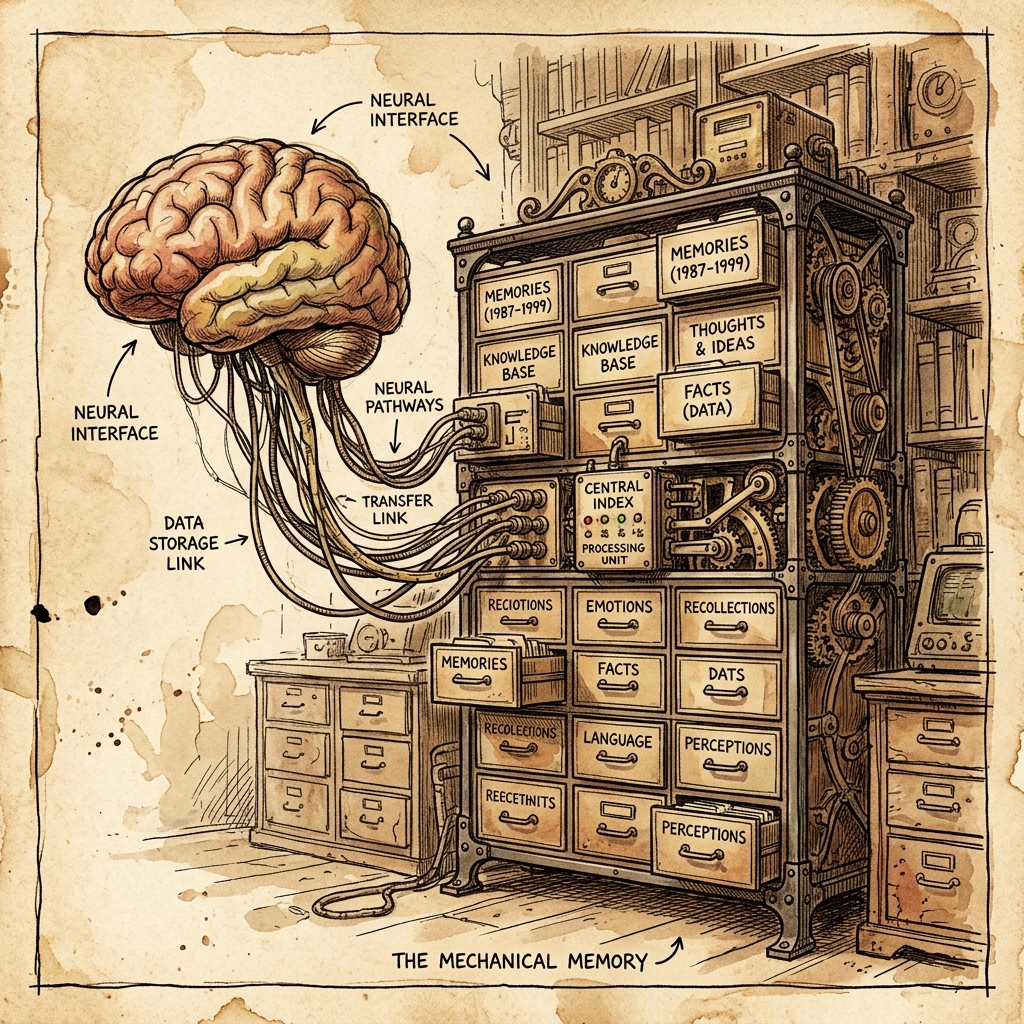
Instead of forcing the LLM to memorize the entire universe of shifting data, RAG treats the language model like an open-book student. When a prompt is submitted, the system queries an external database, pulls the most relevant, real-time documentation, appends it directly to the user's initial prompt, and forwards the entire package to the LLM to build a factually anchored response.
A standard production RAG pipeline consists of four foundational execution steps:
- Indexing: Preparing and storing raw knowledge bases (PDFs, enterprise docs, text files) into a machine-readable format before any query takes place.
- Retrieval: Querying the vector space to extract high-relevance documents that closely match the intent of the user prompt.
- Augmentation: Stitching the original user prompt and the retrieved context documents together seamlessly into a unified payload.
- Generation: Passing the augmented context block into the LLM to output a contextually grounded, hallucination-free answer.
Deep Dive into Indexing & Semantic Vector Spaces
To retrieve data efficiently, we cannot simply pass entire multi-page documents to an LLM due to context window limitations and cost profiles. Instead, the indexing phase breaks documentation down into distinct, manageable segments known as chunks.
These individual chunks are processed through an embedding model that transforms human language into mathematical coordinates inside a high-dimensional Semantic Space. To visualize this concept, imagine a simplified two-dimensional space where words or phrases are mapped based on contextual similarity:
- Words like "Robot" and "Computer" naturally cluster tightly together due to technological relationships.
- Similarly, "Apple" and "Banana" form a separate cluster as fruits.
- Operational commands like "Open" and "Close" sit in an action-based group.
In real-world enterprise architectures, these embeddings are not just 2D points—they stretch across vectors tracking anywhere from:
- Dimensions (): 4,096 to over 12,000 dimensions
These dimensions capture highly precise nuances of intent, syntax, and meaning. Once converted into these mathematical arrays, the chunks are stored inside a specialized high-speed infrastructure known as a Vector Store.
Executing Retrieval and Augmentation
When an interactive query enters the pipeline, the system performs a dynamic multi-step matching process:
- The raw text query is immediately passed through the exact same embedding model used during indexing, yielding a fresh query vector.
- The pipeline projects this query vector straight into the semantic space to analyze mathematical distance against stored document vectors.
To control the depth of data pulled, engineers rely on a critical configuration variable called Top-K. If we define:
- Top-K = 5
The engine identifies and extracts exactly five of the closest, highest-relevance text chunks stored in the database matching that specific vector neighborhood.
During the augmentation phase, the architecture merges the user's raw prompt with these five freshly extracted context chunks. When the LLM receives this unified instruction package, it no longer needs to guess or hallucinate; it simply summarizes the verified target data provided inside the prompt structure, yielding a flawless, verifiable response.
Source Context: Analyzed and adapted from structural technical presentations focusing on localized AI architectures, contextual retrieval pipelines, and vector store engineering solutions.