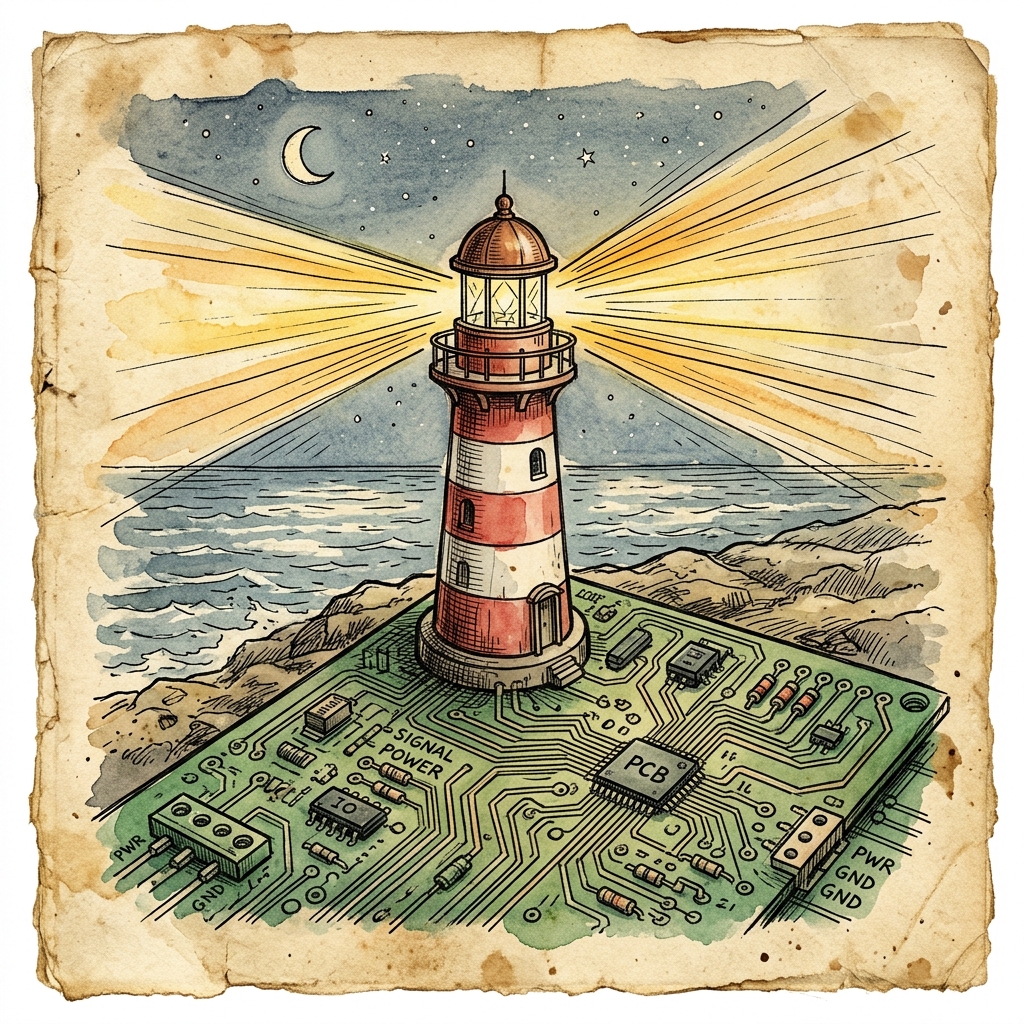
Tired of writing manual Nginx server blocks, troubleshooting Let’s Encrypt errors, and breaking local routing every time you deploy a project? Standard self-hosted PaaS tools like Coolify or Caprover offer automation, but their heavy Docker management layers easily choke a budget 4GB Raspberry Pi. In this guide, we break down Lighthouse—a zero-bloat, open-source deployment manager built from scratch in Go and Alpine.js. Learn how to natively automate local SSL generation, dynamic Nginx reverse proxy versioning via git, and dnsmasq mapping directly through systemd—keeping your entire management plane footprint under 15MB of RAM.
Raspberry PiNginxSSL
Demystifying RAG (Retrieval-Augmented Generation): Why Your AI Needs a Brain Upgrade
RAGLLMSoftware Architecture
I gave AI varying levels of control across 3 real projects for a month. One worked. One hit a hardware wall. One turned into a codebase I couldn't even read. Honest numbers included.
Vibe CodingLocal AIOllama
I used Google AI Studio’s free Gemini 3.5 Flash to build a full travel itinerary app, handling everything from UI design to database integration. Here’s what worked, what broke, and whether you can actually launch with just free tools.
Google AI StudioGemini 3.5 FlashWeb Development
I built a complete AI dev team — PM, Developer, QA agents. All local, no cloud, no API costs. Here's the honest result.
AI AgentsLocal LLMsQwen2.5-Coder
I ran a small local AI model on a budget 4GB GPU to see if it can handle real tasks. Here’s what actually worked and what didn’t.
Local LLMsGPU ComputingOllama
I ran five local Large Language Models (LLMs) on an outdated Nvidia GTX 650 with only 4GB of VRAM. Here’s what actually worked and what didn’t.
Local LLMsGPU ComputingOllama